Projected to Boost Tourism and Economy: Casinos gross gaming revenue could reach US$9.1 billion and boost tourism by 52%
Thailand’s Finance Ministry has confirmed that the proposed Entertainment Complex Bill, which includes provisions for legalizing casinos within integrated resorts, is expected to be debated in Parliament before the end of the year. A critical legal review by the Council of State is set to conclude by March 6, according to local media outlet The Nation. The Cabinet approved the bill on January 13.
The proposed legislation aims to establish casino resorts designed to attract investment, create jobs, and significantly boost tourism revenue. A study indicates that the introduction of casino operations could increase tourist spending in Thailand by 52%.
Regulatory Framework and Government Review
The Council of State has been evaluating the bill for 50 days, focusing on determining the proportion of casino operations within entertainment complexes. Deputy Finance Minister Julapun Amornvivat has suggested capping casino space at 10% of each complex. Additionally, a royal decree is being drafted to identify suitable locations for these entertainment complexes.
An ad hoc committee will be formed to assess key factors, including location, financing, and the overall impact of casino resorts on both the public and government. The Entertainment Complex Policy Committee, chaired by Prime Minister Paetongtarn Shinawatra, will oversee licensing, management, and regulatory compliance.
A dedicated executive board, appointed by the prime minister, will be responsible for implementing strategic initiatives, managing budgets, collecting fees, and addressing complaints. Additionally, an inspection office will be established to monitor compliance, shut down illegal gambling operations, and seize illicit assets.
Casino Licensing and Economic Projections
Casino operators will be required to have a minimum registered capital of THB10 billion (US$297 million). The government will issue 30-year licenses at a cost of THB5 billion (US$148 million), alongside an annual fee of THB1 billion (US$29.7 million). Licenses will be subject to review every five years.
According to Prommin Lertsuridej, Secretary-General to the Prime Minister, legal casinos could position Thailand as a global gaming market leader. Citigroup analysts project that Thailand’s gross gaming revenue (GGR) could reach US$9.1 billion, making it the third-largest gaming market in the world, trailing only Macau and Las Vegas, but surpassing neighboring Singapore.
Political and Public Resistance
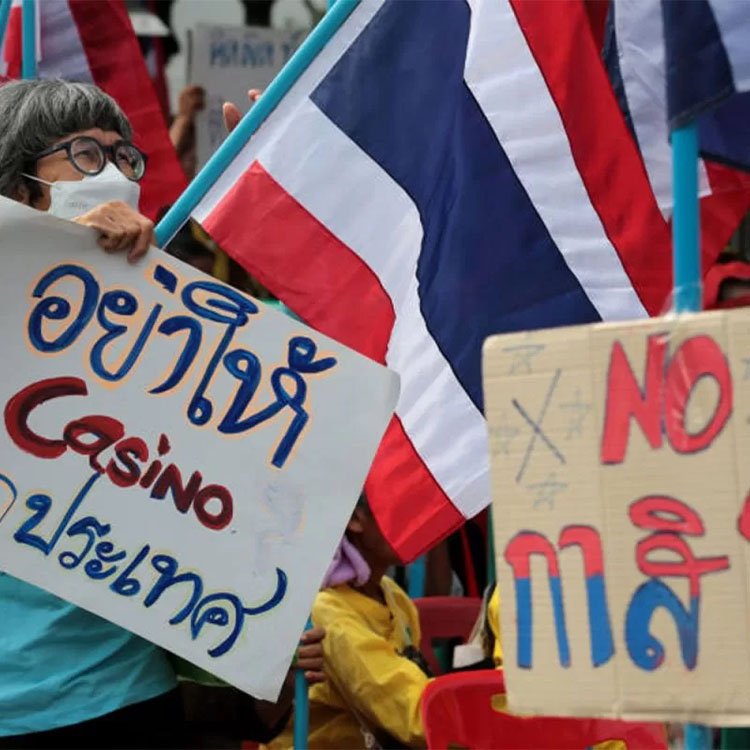
Despite government backing, the proposed bill faces significant opposition. The Thai Sang Thai Party (TST) has announced plans to file a no-confidence motion against the administration on February 27, arguing that the entertainment complex initiative is merely a disguised effort to legalize gambling.
Additionally, a survey conducted by the National Institute of Development Administration (NIDA) revealed that the majority of Thai citizens still oppose casino legalization. This public resistance remains a key challenge for the government as it moves forward with the bill’s review and potential implementation.
Conclusion
If approved, Thailand’s casino industry could transform the country’s tourism landscape, attracting foreign investors from regions such as Macau, the United States, Spain, and Chile. The government’s strategic efforts to regulate and integrate casino gaming into large-scale resorts could redefine Thailand’s position in the global gaming sector, despite continued public scrutiny.