US trade war concerns at the forefront of instability in Asian region
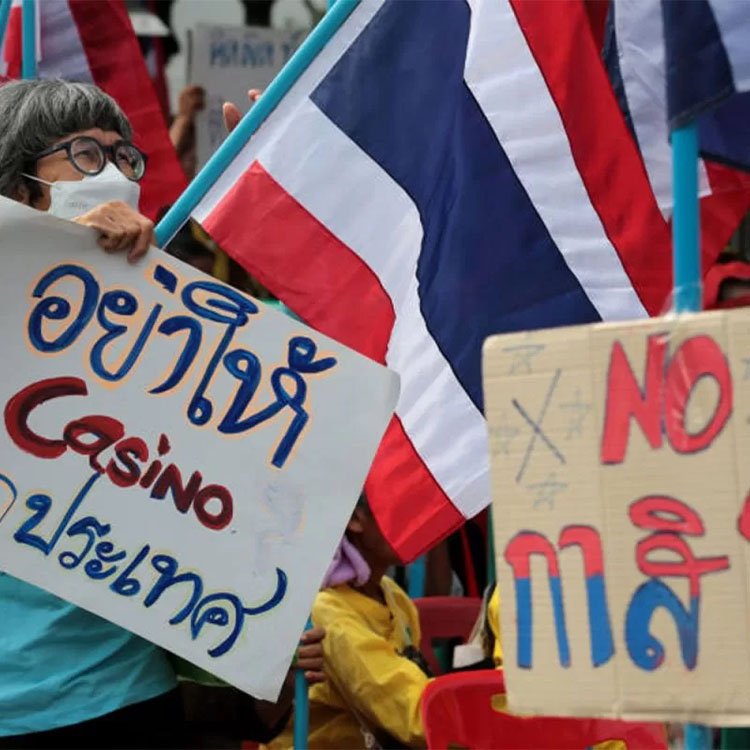
The Thai government has postponed its parliamentary debate on the Entertainment Complex Business Act, a bill proposing the legalization of casinos within integrated resorts, citing rising domestic opposition and mounting instability in global trade relations, particularly the recent escalation in tariffs imposed by the United States.
The debate, originally scheduled for Wednesday, April 9, was deferred despite the bill having previously received cabinet approval. Prime Minister Paetongtarn Shinawatra assured the public that the government has not withdrawn its support for the initiative. Following a coalition meeting, Shinawatra confirmed the bill will be reintroduced during the next parliamentary session. She stressed that public consultation remains a priority and criticized the narrow focus of opposition groups who highlight only the casino component, ignoring the broader vision of multi-purpose entertainment complexes.
The Prime Minister reiterated that any future casinos would be strictly confined to designated resorts and that the developments would cater to a wide demographic, including family-friendly entertainment options. “We will continue to communicate so that people will have a better understanding,” she said.
The deferral of the bill comes at a time of heightened economic uncertainty in the region, partly driven by the United States’ recent decision to impose a 36 percent tariff on Thai exports. Prime Minister Shinawatra pointed to this as a more urgent governmental focus, alongside recovery efforts following a deadly earthquake that struck Bangkok last month.
Deputy Prime Minister Phumtham Wechayachai has previously defended the bill as a critical economic tool designed to attract foreign investment and boost tourism in response to rising trade barriers. Under the proposed legislation, casinos would occupy no more than 10 percent of any entertainment complex, with Thai citizens facing stringent entry restrictions, including proof of THB50 million (approximately US$1.5 million) in bank deposits, as a safeguard against gambling-related harm.
Thai Deputy Finance Minister Julapun Amornvivat expressed surprise at the postponement, having expected the bill to pass its first reading. He cited its recent cabinet endorsement and strong backing from economic stakeholders.
Finance ministry projections suggest that each entertainment complex could attract up to THB100 billion (US$2.9 billion) in investment and create approximately 20,000 jobs. The government also estimates a 40 percent increase in foreign tourist spending per visit, which could significantly boost the country’s tourism sector—an industry that employs 20 percent of the Thai workforce and contributes around 13 percent to the national GDP.