Bangkok, Chon Buri, Chiang Mai, and Phuket are chosen by Special committee
The Thai government’s special committee has proposed Bangkok, Chon Buri, Chiang Mai, and Phuket as the first four locations for new entertainment complexes, which include casinos.
The 500-billion-baht (US$15 billion) projects are expected to attract at least 50 million visitors annually, create 40,000 jobs, and boost the country’s economic growth, according to Nikom Boonwiset, vice-chairman of the special committee. Each complex will feature a five-star hotel, shopping mall, amusement park, sports arena, convention hall, and exhibition centre, with less than 10% of the space allocated for a casino.
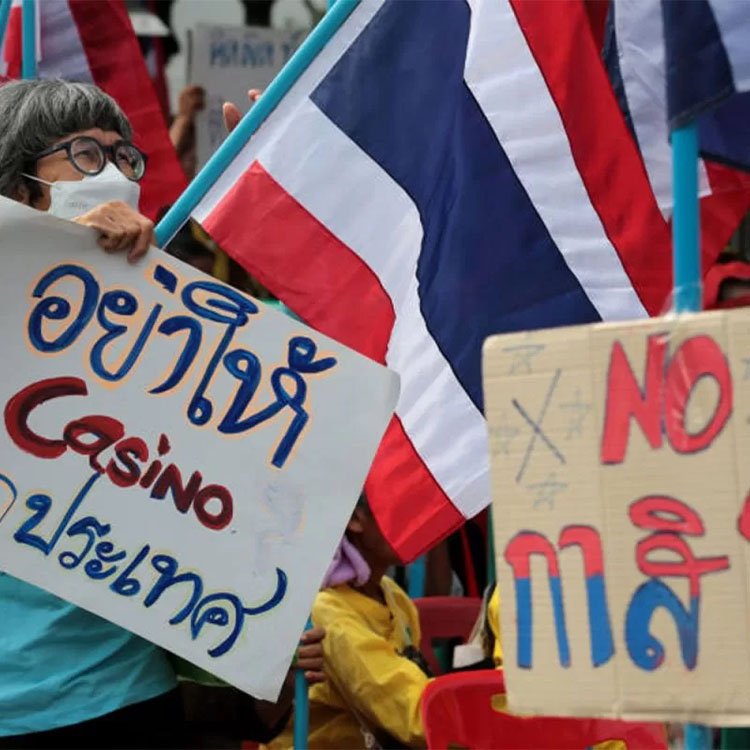
However, the Entertainment Complex Bill’s presentation to the cabinet has been postponed due to public feedback and concerns, with the Stop Gambling Foundation criticizing the bill for containing loopholes and lacking strict measures to prevent youth gambling. The foundation is also concerned about potential money laundering through a brokerage company.
Thailand’s move aims to follow the Singapore model, where integrated resorts have bolstered tourism, and aims to compete with regional casino hubs like Macau, Cambodia, and the Philippines. The government projects a 5-10% increase in foreign visitors (targeting 50 million annually) and at least 40,000 jobs.
Thailand is in the process of developing regulations for its proposed casino entertainment complexes, with the “Entertainment Complex Business Act” (also referred to as the Entertainment Complex Bill) being refined following its approval, in principle, by the Thai Cabinet on January 13, 2025. While the bill has not yet been fully enacted into law—it still requires review by the Office of the Council of State and approval from both the House of Representatives and the Senate—here are the key details on the proposed casino regulations based on the latest developments:
Licensing and Operational Requirements
License Costs and Duration: Operators must be Thai-registered companies with a minimum paid-up capital of 10 billion baht (approximately US$286 million). The initial license fee is set at 5 billion baht (around US$144 million) for a 30-year term, with an annual fee of 1 billion baht (US$30 million). License renewals, possible for up to 10-year extensions, also cost 5 billion baht initially plus the annual 1 billion baht fee.
Casino Size Limitation: Casinos are restricted to occupying no more than 10% of the total area of the entertainment complex, which must include at least four non-gaming attractions such as hotels, convention centres, shopping malls, amusement parks, sports arenas, or concert halls.
Regulatory Oversight: A new commission, the Office of the Full-Service Entertainment Regulatory Commission, will be established to oversee the gaming industry, set additional regulations, and coordinate with investors. A special committee chaired by the prime minister will finalize details like tax rates, the number of licenses, and specific locations.
Access and Entry Restrictions
Thai Nationals: Initially, a controversial proposal required Thai citizens to have 50 million baht (US$1.5 million) in fixed deposits for six months to enter casinos, but this was scrapped in early March 2025 due to its exclusionary nature (only about 10,000 accounts met this threshold). The revised draft now allows entry for Thais with a three-year tax payment history, aiming to broaden access while still deterring excessive gambling. An entry fee of 5,000 baht (US$140) per visit remains in place for Thai nationals.
Foreigners: Foreign visitors can enter casinos for free, aligning with the goal of boosting tourism.
Age Restriction: Individuals under 20 years old are prohibited from entering casino areas.
Economic and Social Framework
Taxation: The proposed gross gaming revenue (GGR) tax rate is 17%, though this is subject to finalization by the regulatory committee. This aims to capture significant revenue, with estimates suggesting up to 187 billion baht ($5.14 billion) annually, or about 1% of Thailand’s GDP.
Locations: Four cities have been named for the initial rollout: Bangkok (two licenses), Chon Buri (encompassing Pattaya), Chiang Mai, and Phuket. Earlier plans mentioned a fifth license for the Eastern Economic Corridor (Chachoengsao, Chon Buri, Rayong), but the current focus is on these four.
Social Safeguards: The government emphasizes regulating the “grey economy” of illegal gambling, with strict licensing and oversight to mitigate risks like money laundering, addiction, and crime. The high entry fee for locals and limited casino space are intended to balance economic benefits with social responsibility.
Current Status and Challenges
Legislative Process: After Cabinet approval, the bill underwent public hearings (concluding March 1, 2025), with 80-82% of participants supporting it. However, Prime Minister Paetongtarn Shinawatra has delayed parliamentary debate to further assess public opinion, reflecting ongoing contention. The Council of State has raised objections, arguing the bill may not effectively address illegal gambling and could conflict with existing policies.
Opposition: Public polls show significant resistance, with concerns about gambling addiction, social problems, and organized crime. Political parties like Bhumjaithai and the Democrat Party argue the economic benefits don’t outweigh potential downsides, citing Thailand’s existing tourism strengths.
Timeline: If passed by mid-2025 as anticipated, the first casinos could open by 2029, ahead of Japan’s Osaka resort timeline.