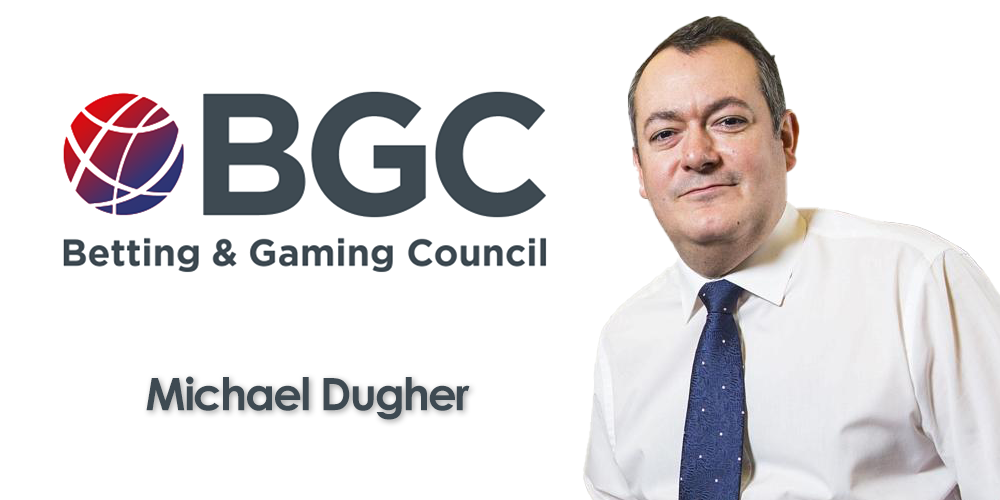
Words come easy to ministers after more than a year of gambling regulations revision
After more than a year of waiting for the outcome of the Gambling Review, and with the Government changing its ministers more times than Watford change football managers, it strikes me that the debate has boiled down to this: should betting be treated like tobacco, which is inherently and universally damaging to all, or should it be treated more like alcohol, something millions of people do and where the vast majority are able to enjoy it responsibly, but where sadly a small minority can have a problem and, in the most extreme and terrible cases, it can be an addiction? Asks Michael Dugher, CEO of the Betting and Gaming Council, and a former Shadow Secretary of State for DCMS.
In his article, Dugher, adds: “Some 22.5 million adults enjoy betting and gaming each month, whether that’s doing the lottery, enjoying a game of bingo or a day at the races, playing casino games or having a bet on the football or other sports. Yet anti-gambling prohibitionists, who again this week called for draconian, arbitrary measures to clampdown on everyone who enjoys a bet, want you to believe having a flutter poses the same risks as having a cigarette. Although this is a minority view in Parliament and certainly amongst the public, it’s an approach that risks disproportionate policy responses to what the Government promised would be an ‘evidence-led’ review.

“Essentially, if you want betting to be treated like alcohol, you need a tough regulatory approach that prevents young people accessing it, that ensures responsible and strictly regulated advertising, that needs to do more to better educate people and raise awareness of the dangers. If you treat betting like tobacco, that leads you to the wish list from the anti-betting lobby who want to tell people what they should be allowed to spend, as well as banning everything from advertising, sports sponsorship and even offers to consumers.
“Can you imagine the middle-class outcry if supermarkets couldn’t do special offers on a bottle of wine? Yet there are some that want to tell working class punters having a flutter on the horses or the football that consumers can’t have any offers on betting.
“And this is where you also start to get to the heart of attitudes towards betting. Undoubtedly, there is a creeping snobbery coming into this debate. A recent editorial in the Times complained that betting was becoming “socially acceptable” (one can only presume the Times think betting is socially unacceptable). One Sunday Times columnist also recently noted that he’d “never understood the appeal of gambling”. Fair enough. Each to their own. But then he spent 18 paragraphs lecturing his readers as to what changes should be made for millions of people for whom betting is appealing and indeed enjoyable.
“There are always extreme views in any debate. One MP at the anti-gambling rally even likened regulated betting firms as “drug dealers” and that gambling was like “a little bag of heroin”. It’s a while since I fought an election, but I’m not sure how successful you’ll be by likening millions of voters who enjoy a bet, in the Red Wall or anywhere else, as a bunch of smack heads.
“But the misinformation also, sadly, comes from people who should know better. There was an embarrassing incident recently whereby NHS England had to change their own press release because they claimed 0.5 per cent of the adult population, around 2.2 million people, “are likely to have some form of gambling addiction”. If true, that would put the UK population at around 400 million, not its actual size of around 67 million.”
New official figures released by the United Kingdom Gambling Commission last month showed that rates of problem gambling had been falling. According to the regulator numbers are down to 0.3 per cent – from 0.6 per cent 18 months ago.
Dugher emphasizes: “That’s equivalent to a drop of 340,000 problem gamblers down to 170,000. The truth is that number, although low by international standards, is still too high which is why we need to target more help to problem gamblers and those at risk.”
However, there is also a fundamental difference between booze and betting. In stark contrast to the alcohol industry, which lands the NHS with the bill for dealing with health problems associated with alcohol abuse. Dugher, adds: “The regulated betting industry is committed to spending £100 million by 2024 on research, education and treatment and the industry has been the majority funder in this area for over 20 years”.
The Minister responsible for gambling, Chris Philp MP, said this week that the Government would act quickly and that they’d do it “in a way that is balanced and proportionate”, and “led by the evidence.”
Although the ministers’ comments ring true, there are many cross-party MPs watching to see that the Government gets the balance right – targeting problem gamblers and those genuinely at risk, not interfering in other people’s freedom of choice or culture. Moreover, if as we have seen the Government in action over a number of issues since PM Boris Johnson took office, planning has not been a strong point for this administration.
As time goes by, government ministers just seem to go on peddling soundbites, but fail to act, and when doing so, fail in many essential policies.