Skip to content
Menu
Menu

BRAZIL – Senate approves Sports Betting regulations

Authorized operators to pay US$6.4 million for licenses of up to five years

Brazil’s Senate Plenary approved the text of the bill that regulates sports betting, also called “bets” locally, Bill 3.626/2023, on Tuesday (12). The bill proposed by the Executive was presented by Senator Angelo Coronel, after some modification by the Senate, and now will return to the Chamber of Representatives for further analysis.

PL 3.626/23 was approved in a symbolic vote, with many of the opposition against it, and after debate on the text, three important points were also under further consideration, of which two were approved.

With 37 votes in favor and 27 against, senators included an amendment proposed by Senator Carlos Portinho that limits the scope of the bill to games based on actual facts and excluding online casino games. Also accepted (with 45 votes in favor and 23 against) was an amendment by Senator Tereza Cristina that excludes the installation of physical machines from the bill.
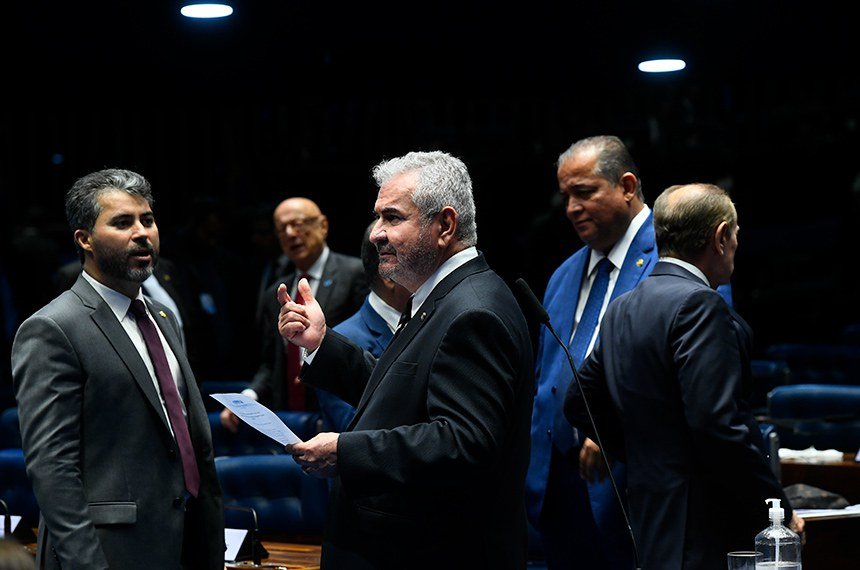
The bill had 36 votes in favour and 25 against, with the senators able to approve advertising of sports betting in sports stadiums and sponsorship of athletes by gambling companies – after an amendment prohibiting such practices had been presented by Senator Eduardo Girão, but in the end, they ended up being rejected.

Fixed odds

The bill modifies the law that provides for the free payment of prizes for advertising purposes (Law 5,768, of 1971) and the law that deals with the destination of lottery proceeds and the lottery modality of fixed odds bets (Law 13,756, of 2018). The fixed-odds lottery – which is in effect sports betting within Brazilian law – is a betting system that includes virtual online gaming events and real sports-themed events, such as football and volleyball matches, for example. In this modality, the bettor will win if they bet on any in game condition during the course of the game or match or the final result of the match.

The approved bill makes provisions for the taxation of operators of sports betting companies and winning bettors. Law 13,756, of 2018, which created this type of lottery – sports betting – provided that companies would keep 95% of gross income (after the payment of prizes and income tax), while the approved bill allows operators 88%. The bill also determines that operators must pay a subsidy (for the operating license) of up to R$ 30 million (US$ 6.35) for exploitation of the sports betting products.

According to the Bill, fantasy sports, an electronic sport in which disputes take place in a virtual environment, based on the performance of real people, does not constitute the exploitation of a lottery modality such as the Sports Betting, and therefore, the modality is exempt from government authorization.

Tax revenue distribution

Of the tax revenue collected, 2% will go to Social Security. Other recipients of the funds will be the areas of Sports (6.63%) and Tourism (5%).

In Sports, the amounts will be shared between the Ministry of Sports (4%), athletes (1.13%) and specific sports confederations, with percentages ranging from 0.05% to 0.4%. Half per cent of the amount will go to the state sports secretariats, which will have to distribute half to the municipal sports secretariats in proportion to the city’s population; while in tourism, 4% will go to the Ministry of Tourism and 1% to Embratur.

Also, according to proposals in the bill, Education will keep 1.82% of the proceeds. Within this amount, 0.82 percentage points will be allocated to kindergarten or primary and secondary schools that have achieved the targets of the national assessment results, whilst the remainder (1%) will be assigned to public technical high schools.

The Authorization

For sports betting to be operated by the operating agent (i.e., the company that operates the system), future regulation will require authorization from the Ministry of Finance, which will gran licenses for a period of up to five years, a period that may be reviewed at any time. Sports Betting legal entities must meet several requirements, such as having its headquarters and administration in Brazilian territory, having at least one of the members of the control group with proven knowledge and experience in gambling, betting or lotteries, in addition to complying with technical and cybersecurity requirements.

The administrative authorisation procedure will be carried out electronically and, during its analysis, access will be restricted only to the interested party and those who represent them. The authorisation will only be issued if, after examining the documentation and assessing the technical and financial capacity of the company and the reputation and knowledge of its controllers and administrators, the Ministry of Finance concludes that all legal and regulatory requirements have been met. A fixed licensing consideration will also be charged as stipulated in the regulations (limited to R$ 30 million).

Advertising

All electronic channels used by the sports betting operating agent must clearly display information such as the number and date of publication of the authorisation ordinance, the physical address of its headquarters, contact telephone numbers of customer service and the ombudsman.

The communicative and advertising actions of sports betting, transmitted by the operating agents, must include warnings that discourage gambling and warn about its harms, in addition to observing the restriction of schedules and transmission channels. Ads that portray gambling as socially appealing or contain statements from well-known personalities suggesting that gambling contributes to social or personal success will be prohibited.

In addition, there is prohibition for dissemination of unsubstantiated claims about the likelihood of winning or claims that lead to understanding that sports betting can constitute an alternative to employment, a solution to financial problems or a form of financial investment. The text in the bill also prohibits the operating agent from acquiring rights to sporting events of any form displaying of sounds and images.

Integrity in Sports Betting

Sporting events subject to fixed odds betting must have actions in place to mitigate match-fixing and corruption in live events, and bets that are proven to have been placed through match-fixing and ensuing corruption will be null and void.

Betting funds may not be used as collateral for debts assumed by the sports betting operating company, and the operating agent must adopt identification procedures to verify the validity of the identity of betting member of the public.

Minors, persons with significant influence of the sports betting operating company, their employees, public agents with functions directly related to sports betting regulations and supervision of the activity, persons who have or may have access to computerized lottery sports betting systems, and any person who has or may have influence on the outcome of events subject to sports betting lottery activities may not engage in sports betting activities, such as athletes and other participants.

Forfeit of betting wins

Any bettor loses the right to receive his winnings or to request any refunds if the payment due is not graphically credited to his account with the operating agent and it is not claimed by the bettor within 90 days from the date of disclosure of the result of the event that is the subject of the bet.

All amounts of unclaimed winning will revert as follows: 50% to the Student Financing Fund (Fies) and 50% to the National Fund for Public Calamities, Protection and Civil Defense (Funcap), taking into account the financial and budgetary programming of the Federal Executive Branch.

Penalties

Violations of Sports Betting legislation will be investigated via an administrative process, with penalties for operating agents who violate legal and regulatory rules, ranging from warnings to fines of up to 20% of the proceeds. Fines according to the bill cannot be less than the financial advantage obtained by the offender but no more than 2 billion Brazilian Reales (US$403 million) reais per each infringement.

Among the sanctions imposed, there may be partial or total suspension from exercising sports betting business activities for up to 180 days, revocation of authorization, prohibition of obtaining new authorization for up to 10 years, prohibition of participating in tenders for a period of no less than 5 years, and disqualification from acting as director of a company that explores any type of lottery for up to 20 years.

In the case of any other natural or legal person under public or private law, where it is not possible to use the stated criteria related to proceeds of revenue in the case of fines, these fines may range from R$50,000 to R$2 billion for each infringement.

The Ministry of Finance may also cease to initiate or suspend, at any stage prior to the decision of Court in the First Instance, the administrative procedure aimed at investigating the planned infringement, if the person under investigation signs a commitment for a period in which there is an undertaking to cease the practice under investigation and to correct any stated irregularities.

Courtesy: Senate news Agency in Portuguese original format

Images: Marcos Oliveira/ (Agência Senado)

23 November 2026

Subscribe to our newsletter

More
Related Posts

Categories

BRAZIL – Senate approves Sports Betting regulations

Authorized operators to pay US$6.4 million for licenses of up to five years

Brazil’s Senate Plenary approved the text of the bill that regulates sports betting, also called “bets” locally, Bill 3.626/2023, on Tuesday (12). The bill proposed by the Executive was presented by Senator Angelo Coronel, after some modification by the Senate, and now will return to the Chamber of Representatives for further analysis.

PL 3.626/23 was approved in a symbolic vote, with many of the opposition against it, and after debate on the text, three important points were also under further consideration, of which two were approved.

With 37 votes in favor and 27 against, senators included an amendment proposed by Senator Carlos Portinho that limits the scope of the bill to games based on actual facts and excluding online casino games. Also accepted (with 45 votes in favor and 23 against) was an amendment by Senator Tereza Cristina that excludes the installation of physical machines from the bill.

The bill had 36 votes in favour and 25 against, with the senators able to approve advertising of sports betting in sports stadiums and sponsorship of athletes by gambling companies – after an amendment prohibiting such practices had been presented by Senator Eduardo Girão, but in the end, they ended up being rejected.

Fixed odds

The bill modifies the law that provides for the free payment of prizes for advertising purposes (Law 5,768, of 1971) and the law that deals with the destination of lottery proceeds and the lottery modality of fixed odds bets (Law 13,756, of 2018). The fixed-odds lottery – which is in effect sports betting within Brazilian law – is a betting system that includes virtual online gaming events and real sports-themed events, such as football and volleyball matches, for example. In this modality, the bettor will win if they bet on any in game condition during the course of the game or match or the final result of the match.

The approved bill makes provisions for the taxation of operators of sports betting companies and winning bettors. Law 13,756, of 2018, which created this type of lottery – sports betting – provided that companies would keep 95% of gross income (after the payment of prizes and income tax), while the approved bill allows operators 88%. The bill also determines that operators must pay a subsidy (for the operating license) of up to R$ 30 million (US$ 6.35) for exploitation of the sports betting products.

According to the Bill, fantasy sports, an electronic sport in which disputes take place in a virtual environment, based on the performance of real people, does not constitute the exploitation of a lottery modality such as the Sports Betting, and therefore, the modality is exempt from government authorization.

Tax revenue distribution

Of the tax revenue collected, 2% will go to Social Security. Other recipients of the funds will be the areas of Sports (6.63%) and Tourism (5%).

In Sports, the amounts will be shared between the Ministry of Sports (4%), athletes (1.13%) and specific sports confederations, with percentages ranging from 0.05% to 0.4%. Half per cent of the amount will go to the state sports secretariats, which will have to distribute half to the municipal sports secretariats in proportion to the city’s population; while in tourism, 4% will go to the Ministry of Tourism and 1% to Embratur.

Also, according to proposals in the bill, Education will keep 1.82% of the proceeds. Within this amount, 0.82 percentage points will be allocated to kindergarten or primary and secondary schools that have achieved the targets of the national assessment results, whilst the remainder (1%) will be assigned to public technical high schools.

The Authorization

For sports betting to be operated by the operating agent (i.e., the company that operates the system), future regulation will require authorization from the Ministry of Finance, which will gran licenses for a period of up to five years, a period that may be reviewed at any time. Sports Betting legal entities must meet several requirements, such as having its headquarters and administration in Brazilian territory, having at least one of the members of the control group with proven knowledge and experience in gambling, betting or lotteries, in addition to complying with technical and cybersecurity requirements.

The administrative authorisation procedure will be carried out electronically and, during its analysis, access will be restricted only to the interested party and those who represent them. The authorisation will only be issued if, after examining the documentation and assessing the technical and financial capacity of the company and the reputation and knowledge of its controllers and administrators, the Ministry of Finance concludes that all legal and regulatory requirements have been met. A fixed licensing consideration will also be charged as stipulated in the regulations (limited to R$ 30 million).

Advertising

All electronic channels used by the sports betting operating agent must clearly display information such as the number and date of publication of the authorisation ordinance, the physical address of its headquarters, contact telephone numbers of customer service and the ombudsman.

The communicative and advertising actions of sports betting, transmitted by the operating agents, must include warnings that discourage gambling and warn about its harms, in addition to observing the restriction of schedules and transmission channels. Ads that portray gambling as socially appealing or contain statements from well-known personalities suggesting that gambling contributes to social or personal success will be prohibited.

In addition, there is prohibition for dissemination of unsubstantiated claims about the likelihood of winning or claims that lead to understanding that sports betting can constitute an alternative to employment, a solution to financial problems or a form of financial investment. The text in the bill also prohibits the operating agent from acquiring rights to sporting events of any form displaying of sounds and images.

Integrity in Sports Betting

Sporting events subject to fixed odds betting must have actions in place to mitigate match-fixing and corruption in live events, and bets that are proven to have been placed through match-fixing and ensuing corruption will be null and void.

Betting funds may not be used as collateral for debts assumed by the sports betting operating company, and the operating agent must adopt identification procedures to verify the validity of the identity of betting member of the public.

Minors, persons with significant influence of the sports betting operating company, their employees, public agents with functions directly related to sports betting regulations and supervision of the activity, persons who have or may have access to computerized lottery sports betting systems, and any person who has or may have influence on the outcome of events subject to sports betting lottery activities may not engage in sports betting activities, such as athletes and other participants.

Forfeit of betting wins

Any bettor loses the right to receive his winnings or to request any refunds if the payment due is not graphically credited to his account with the operating agent and it is not claimed by the bettor within 90 days from the date of disclosure of the result of the event that is the subject of the bet.

All amounts of unclaimed winning will revert as follows: 50% to the Student Financing Fund (Fies) and 50% to the National Fund for Public Calamities, Protection and Civil Defense (Funcap), taking into account the financial and budgetary programming of the Federal Executive Branch.

Penalties

Violations of Sports Betting legislation will be investigated via an administrative process, with penalties for operating agents who violate legal and regulatory rules, ranging from warnings to fines of up to 20% of the proceeds. Fines according to the bill cannot be less than the financial advantage obtained by the offender but no more than 2 billion Brazilian Reales (US$403 million) reais per each infringement.

Among the sanctions imposed, there may be partial or total suspension from exercising sports betting business activities for up to 180 days, revocation of authorization, prohibition of obtaining new authorization for up to 10 years, prohibition of participating in tenders for a period of no less than 5 years, and disqualification from acting as director of a company that explores any type of lottery for up to 20 years.

In the case of any other natural or legal person under public or private law, where it is not possible to use the stated criteria related to proceeds of revenue in the case of fines, these fines may range from R$50,000 to R$2 billion for each infringement.

The Ministry of Finance may also cease to initiate or suspend, at any stage prior to the decision of Court in the First Instance, the administrative procedure aimed at investigating the planned infringement, if the person under investigation signs a commitment for a period in which there is an undertaking to cease the practice under investigation and to correct any stated irregularities.

Courtesy: Senate news Agency in Portuguese original format

Images: Marcos Oliveira/ (Agência Senado)

LinkedIn
Share
Youtube
X (Twitter)