Skip to content
Menu
Menu

BELGIUM – BAGO self-imposes a duty of supervision on problem gambling 

Thiéry: “At the end of the day, you don’t build a sustainable economic activity at the expense of addictions”

A prevention policy based on scientific knowledge, data and artificial intelligence will make it possible to identify and prevent problematic gambling behaviours more quickly.

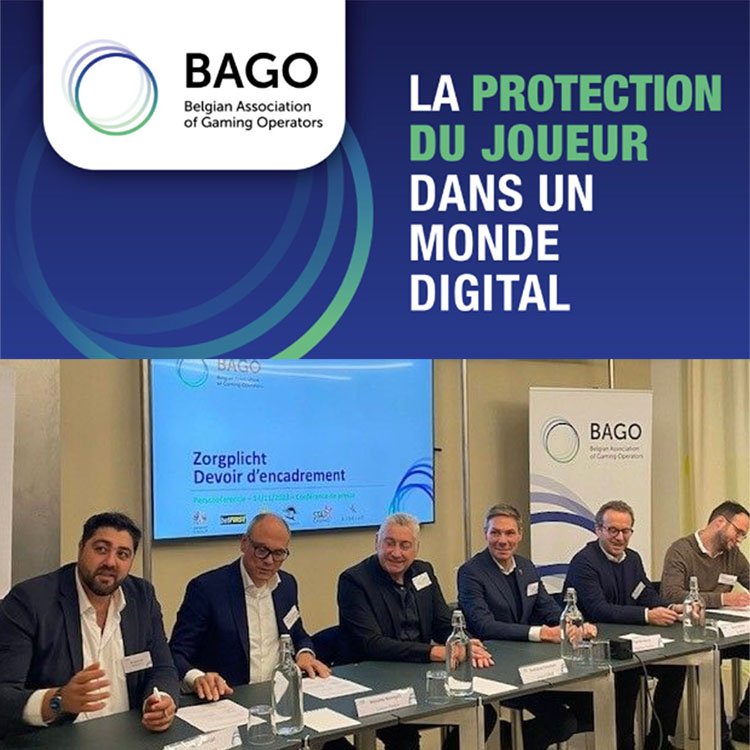
On 14 November 2023, six Belgian gambling operators proudly signed the Duty of Supervision Convention. This agreement provides a clear framework within which each operator commits to developing a prevention policy that allows for faster identification and prevention of problematic gambling behaviours, based on scientific criteria.  BAGO has called on the Belgian government to put in place an evidence-based policy.

The six operators, all members of the Belgian Association of Gaming Operators (BAGO), are aware of their social responsibility. As with many other goods and services, digitalization has greatly facilitated access to gambling. Today, 70% of Belgian gamers play online. And while the vast majority of Belgians do it responsibly, there are instances where things can get out of hand. 

“Sciensano estimates that about 0.9% of the population is prone to gambling addiction. This is often accompanied by emotional, relational, and financial problems,” says Damien Thiéry, Secretary General of BAGO. “We want to avoid this at all costs, because legal gambling operators want to offer a safe form of entertainment. At the end of the day, you don’t build a sustainable economic activity at the expense of addictions.”

The Convention on the Duty of Supervision, signed by the six largest companies in the Belgian private gambling sector, stipulates that each operator undertakes to develop, if it has not already done so, a prevention policy based on four pillars: 

  1. A detection system, based on algorithms, artificial intelligence and scientific criteria (Markers of Harm), that identifies potentially risky behaviours. The criteria used include frequency of play, duration of play, intensity, deposits, and other relevant criteria to identify potentially risky behaviours.
  1. Actions and/or recommendations to protect players, such as providing information about potential risks, proposing voluntary deposit limits, implementing a “reality check”, self-exclusion, and general exclusion by regulatory authorities.
  1. Education and training of operating staff so that they are able to identify potential problems and take appropriate action. Sharing of the prevention policy implemented with the Gambling Commission.
  1. In the long term, operators want to work with the Gambling Commission to establish an independent oversight mechanism. They are also calling on the government to make gambling risks prevention policy mandatory by regular law for all legal gambling operators in Belgium, including the National Lottery. 

“Our goal is to create an environment where players can participate in gambling responsibly and safely,” said Tom De Clercq, president of BAGO. “This supervisory obligation is a useful complement to other existing safeguards, such as PPE control and deposit limits, with verification that it is not accompanied by defaults.” 

Emmanuel Mewissen, Vice President of BAGO, adds: “However, it is not enough to create a legal and safe gaming environment. Players must also be able to be aware themselves of risks. And this is becoming increasingly difficult, as legal operators have been banned from advertising. Already today, 1 in 5 Belgians play on the illegal gambling circuit. Tomorrow it could be 2 out of 5.”

BAGO advocates for an evidence-based government approach, where the impact of measures is effectively measured and adapted. More recently, it has become clear that Italy’s advertising ban is leading to an unprecedented growth of the illegal market.

23 November 2026

Subscribe to our newsletter

More
Related Posts

Categories

BELGIUM – BAGO self-imposes a duty of supervision on problem gambling 

Thiéry: “At the end of the day, you don’t build a sustainable economic activity at the expense of addictions”

A prevention policy based on scientific knowledge, data and artificial intelligence will make it possible to identify and prevent problematic gambling behaviours more quickly.

On 14 November 2023, six Belgian gambling operators proudly signed the Duty of Supervision Convention. This agreement provides a clear framework within which each operator commits to developing a prevention policy that allows for faster identification and prevention of problematic gambling behaviours, based on scientific criteria.  BAGO has called on the Belgian government to put in place an evidence-based policy.

The six operators, all members of the Belgian Association of Gaming Operators (BAGO), are aware of their social responsibility. As with many other goods and services, digitalization has greatly facilitated access to gambling. Today, 70% of Belgian gamers play online. And while the vast majority of Belgians do it responsibly, there are instances where things can get out of hand. 

“Sciensano estimates that about 0.9% of the population is prone to gambling addiction. This is often accompanied by emotional, relational, and financial problems,” says Damien Thiéry, Secretary General of BAGO. “We want to avoid this at all costs, because legal gambling operators want to offer a safe form of entertainment. At the end of the day, you don’t build a sustainable economic activity at the expense of addictions.”

The Convention on the Duty of Supervision, signed by the six largest companies in the Belgian private gambling sector, stipulates that each operator undertakes to develop, if it has not already done so, a prevention policy based on four pillars: 

  1. A detection system, based on algorithms, artificial intelligence and scientific criteria (Markers of Harm), that identifies potentially risky behaviours. The criteria used include frequency of play, duration of play, intensity, deposits, and other relevant criteria to identify potentially risky behaviours.
  1. Actions and/or recommendations to protect players, such as providing information about potential risks, proposing voluntary deposit limits, implementing a “reality check”, self-exclusion, and general exclusion by regulatory authorities.
  1. Education and training of operating staff so that they are able to identify potential problems and take appropriate action. Sharing of the prevention policy implemented with the Gambling Commission.
  1. In the long term, operators want to work with the Gambling Commission to establish an independent oversight mechanism. They are also calling on the government to make gambling risks prevention policy mandatory by regular law for all legal gambling operators in Belgium, including the National Lottery. 

“Our goal is to create an environment where players can participate in gambling responsibly and safely,” said Tom De Clercq, president of BAGO. “This supervisory obligation is a useful complement to other existing safeguards, such as PPE control and deposit limits, with verification that it is not accompanied by defaults.” 

Emmanuel Mewissen, Vice President of BAGO, adds: “However, it is not enough to create a legal and safe gaming environment. Players must also be able to be aware themselves of risks. And this is becoming increasingly difficult, as legal operators have been banned from advertising. Already today, 1 in 5 Belgians play on the illegal gambling circuit. Tomorrow it could be 2 out of 5.”

BAGO advocates for an evidence-based government approach, where the impact of measures is effectively measured and adapted. More recently, it has become clear that Italy’s advertising ban is leading to an unprecedented growth of the illegal market.

LinkedIn
Share
Youtube
X (Twitter)