Germany ratifies Third State Treaty on Gambling
With a view to a complete overhaul of Germany’s gambling regulations by 2021
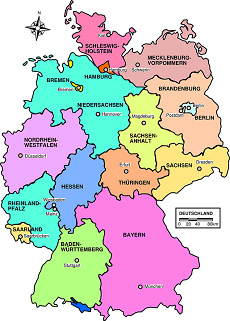
The Minister-Presidents of Germany’s 16 federal states have ratified the third amended State Treaty on Gambling, paving the way for operators to apply for sports betting licences in the market, while Schleswig-Holstein will be allowed to run its own, liberal regulatory regime.
At the Minister-Presidents’ Conference last week, the lawmakers agreed to sign the Treaty, with licences to come into force from January 1, 2020 and run until June 30, 2021. This will effectively act as a placeholder with a view to a complete overhaul of Germany’s gambling regulations by 2021. The Treaty will also be submitted to the European Commission to be ratified, which is expected to take place in April this year, with a view to beginning the licensing process later in 2019.
The third amended State Treaty has undergone few changes from the 2012 edition, though the controversial 20-licence limit has been removed. While there is no limit on the number of operators that can be licensed, licensees will be taxed on 5% of turnover, in-play betting is prohibited, and players will not be allowed to spend more than €1,000 (US$1,137) each month. As before, sports betting is the only vertical permitted.
Schleswig-Holstein will be permitted to continue with its own liberal regulatory model until 2021. First introduced in 2011, the state does not impose any restrictions on product verticals and sets a 20% gross revenue tax. Steps towards renewing licences issued in 2012 began last week and will run until June 30, 2021. The state will effectively act as a testing ground for a more liberal model, which from 2021 could be rolled out across the rest of the country.
Dr Wulf Hambach of leading German law firm Hambach & Hambach suggested that due to the short-term nature of the amended Treaty, it would be difficult to enforce the prohibition on live betting, adding: “There is also a big question over whether the online casino ban will be obeyed from January 1, 2020 onwards. If, for instance, other federal states are in favour of online casino regulation, they are unlikely to enforce the ban.”
Hambach said that with varied stances on gambling regulation across a number of states, the 2021 overhaul could give states the choice to opt in or out of a more liberal framework: “I think it’s is likely that after 2021 you will see a fully regulated market, so this one step in the right direction, and there are already a lot of discussions between states, but I think these talks are very fruitful. If you look back two or three years, there has never really been serious discussions about major reforms to gambling regulation. This is the first time that it feels like a major step forward has been taken.”