Brazil – Rio mayor supports casino IR
Would be best way for the state to control illegal gambling market
“As a mirror of the city itself, the port area of Rio has an unmistakable image for tourist activities, leisure, gastronomy and entertainment,” reads an editorial item in the Brazilian leading daily O Globo.
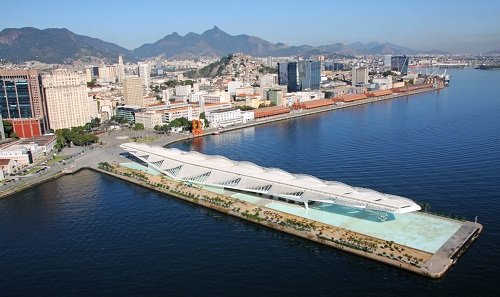
Revitalized since the demolition of the high perimeter wall within the works package for the 2016 Olympics, the Rio port area zone now shines in its own light. In the last two years it has implemented new city cultural icons, such as museums: do Amanhã, which has received more than 3 million visitors, and the Museo Arte do Rio (MAR), as well as the Aquario.
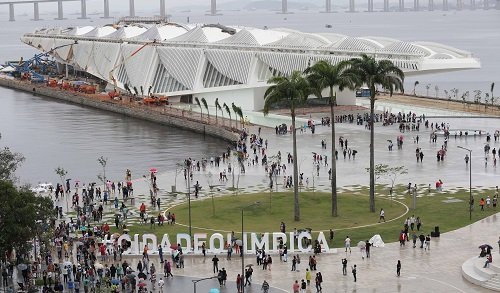
Following a period of hesitation and reflection on the severe economic recession of 2015/2016, companies are beginning to move into the zone of the Rio port, occupying modern buildings which were built in the euphoria of the 2016 Olympic Games.
However, the public-private partnership that supports Porto Maravilha, involving the City Council, the Caixa Economica Federal and the Porto Novo concessionaire, faces moments of inactivity as a result of the economic crisis that paralyzed the city’s real estate market and the economy in general, jeopardizing associations like Porto Maravilha, called public-private Partnerships (PPPs), which are fundamental for the city.
It is important to remember that with the interruption of La Caixa programmes, the City had to take over maintenance of the area. In this sense, the idea of Rio Mayor Marcelo Crivella is coherent when he talks about supporting construction of an Integrated Resort casino complex in the port, along the lines of something like the Marina Bay Sands in Singapore, in order to finance the development of the region. For a project like this there would be foreign companies willing to invest in the project, including Las Vegas Sands Corp., owner of the Singapore IR.
In fact, this could be a great way out, although, according to Crivella, the legal obstacles must still be overcome. Gambling, and more specifically, casinos, were banned in the country in April 1946, during the government of Eurico Gaspar Dutra, and that prohibitive legislation governs still today. At least officially, because in practice casinos are known to operate illegally in every corner of Brazil.
At any rate, digital technology these days allows companies to set up business in countries where gambling is allowed and to receive bets from anyone, including Brazilians. This means that when the house wins the state is the loser, being unable to collect on gambling tax because it has no gambling legislation or specific regulations.
It is estimated that in its legalized gambling form – lotteries, horse racing, sports betting, etc.- and also in illegal gambling – Jogo do bicho, slot machines, casinos – Brazil generates around R$50 billion a year, some US$13 billion. It is assumed that per capita gambling spending in Brazil is US$18.53, while in Uruguay it is US$40, and in Portugal the sum reaches US$228.
The only way that the State can exercise effective control over this market is by legalizing gambling. There are several casino and gambling legislation projects in Congress, from the most restrictive to the most permissive, with proposals to get Gaming out in the open. However, say the critics, there is a need to be cautious about the alleged connection of these activities with money laundering for example.
In the face of such an example, industry and gaming regulation experts make the sound claim that while there is suspicion of crimes within the regulated gaming industry, such suspicion turns to fact in illegal gambling, which coexist with criminal elements whose cleanest crime is, indeed, money and assets laundering.
© 2019. Greata Limited